
Stories Matter.
They are the thread that runs through our existence as human beings on this planet; everyone relates through story. So no matter what you are doing in life, including creating and running a business, it’s your story that matters most. Want to make an impact? Then tell the world, not only what you do, but who you are. Then we’ll want to know how you did it.
Everyone has a story.
Welcome to Mark Brodinsky Storytelling.
_______________________________________________________________________
Mark Brodinsky Storytelling: A New Sense Of Purpose

“It ain’t over till it’s over!” – Yogi Berra, MLB Hall of Fame
Say it like it is, Yogi. If you handle the heartache, if you fight through the hardship, if you battle back from the brink, if you get up off the mat – if, if, if – then you win. If you never give up, you turn your “if” into infinite victory.
Enter, Carson Rogers.
Carson has completed the battle royale. Seemingly beaten back by the “c” word, Carson, a long-time USHEALTH Advisors agent and leader, is sharing his comeback story in the hopes of inspiring others to do the same.
Carson, once living on the edge of despair and lack of hope, has beaten back the disease that, as soon as it’s mentioned, strikes fear, anxiety, worry, and a myriad of other emotions into the heart of the victim and the hearts of those who love them.
Cancer.
“I mean, I can’t forget this date,” says. Carson. “October 19th, 2024, is when everything officially went down and when I realized something was up.”
“I woke up on a Friday, and I was in Chattanooga, Tennessee. I’ve got a small branch of my USHA Division in Chattanooga. And as I’m driving home, I feel this ping, this tingle in my left shin. It felt like somebody had a little hammer and they were dinging me every five to 10 seconds, and it hurt. It was obviously a weird feeling. So, I get home, and I put those Icy Hots on my leg. I’m thinking this has to end soon. I mean, I don’t have any idea what it’s about. I was having a lot of weird bruises and gout before that, but nothing that would insinuate anything more serious. And after about 24 hours, my wife Lindsey comes in. She’s like, “I’m tired of hearing you moaning. I don’t know what it is, but let’s at least go get it checked out.”
“It was a Saturday. Most doctors’ offices are closed. We tried to get into an urgent care. They had no business talking to me because they didn’t know what they were doing. So I went to the ER. I don’t think I’d ever been to the ER once in my entire life. They take me back pretty quickly, and I’m watching them run tests on me. I’m watching and thinking, “Well, that doesn’t seem like these tests are for my leg.” And after about five hours, they come back to say that I do have a leg problem, but I have a leg problem because I have leukemia. It was a really, really surreal moment, a very wild moment for me. I was sitting there in bed, and I just couldn’t believe it. And the wild thing about my leukemia and my type of cancer, if you research it, it’s not serious, it is not severe.”
At least not most of the time. It’s called Hairy Cell Leukemia. HCL is a rare, slow-growing type of “B” lymphocytes (a type of white blood cell), characterized by abnormal cells with hair-like projections. It typically manifests in the bone marrow and spleen, causing fatigue, infections, and bleeding due to the crowding out of healthy blood cells. HCL often responds well to treatment, leading to long-term remission and normal life expectancy.”
Except Carson’s case wasn’t normal. One of the most successful leaders in USHA history, over the past decade plus, Carson has been a model of consistency, with more than $9 million in personal career production and, even more impressively, his teams are closing in on nearly $400 million in lifetime annual volume. Those numbers mean a lot of sweat equity, long days and nights, at times a battle of will, yet, at only 37-years-of age, Carson was about to face the biggest fight of his life.
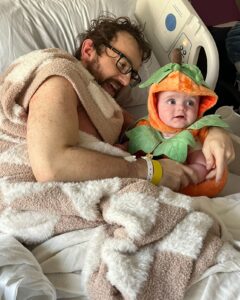
“Cancer sucks, but mine was treatable. It’s not something that has stages or is necessarily terminal,” says Carson. “I didn’t have to do radiation. But the problem is I didn’t catch the cancer during an annual exam. I caught the cancer because my leg was basically falling off. So I had to have two major surgeries on my leg. The cancer was causing my leg to puff up; my left leg was three times the size of my right leg because I had a blood-thinning cancer, and it was acting up. So I had surgery on it, and I was in the hospital for about 13 days, and then they discharged me. I didn’t really feel like I was ready to be discharged, but of course, I didn’t want to live in that hospital bed anymore.”
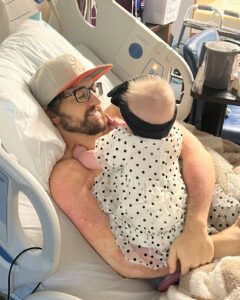
Carson knew there was no place like home because of the support from his family. Carson and his wife, Lindsey, also a USHA agent and leader, were married in March of 2023. They welcomed their daughter, Charlie Anne, into the world in February 2024. Now, eight months later, the family was in crisis. While home was where his heart was, for Carson, only 37 years old at the time, his mind was going somewhere else, back to the pain and discomfort and then to something even deeper.”

“This is dark, but it’s factual,” says Carson. “In October, I thought that I was going to pass. I didn’t think I was going to make it in November; I wanted to pass on. I was in so much pain. By December, I was back, but I was on so many pain pills. I don’t remember a lot of it because of the pain pills, which I was now taking every day. And that’s no fun either. On the pills, you’re not yourself, but you don’t really know it. Somebody has to tell you how out of it you are. So that was pretty defeating.”
In life, you can’t connect the dots looking forward, only looking back. How lucky Carson was to have his wife and daughter by his side to get through the trauma. Having been married only a year-and-a-half before all this happened, and bringing a healthy daughter into the world, Carson knows what a blessing it was to have Lindsey and Charlie in his life.
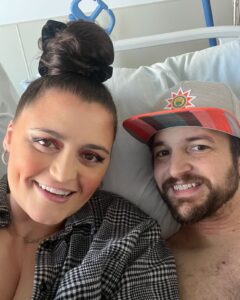
“Lindsey was such a godsend,” says Carson. “She’s taking care of my leg, she’s wrapping my leg, she’s tending to it, and at the same time she’s taking care of our 8-month-old daughter. I can’t start my chemotherapy yet because my leg is in such bad shape that if I started the chemo, which tears you down first, before building you back up, I would’ve been hindering or hurting my leg. So after a few days at home on the couch, the leg starts getting worse again. And we learn at a doctor’s office that I need to have a plastic surgeon do another surgery on it. Then we try to go to five different plastic surgeons. What we learn is that a plastic surgeon makes his or her money off of a nose job or a boob job, or something more elective, something that’s not as serious as my leg. So they won’t take me on as a patient.”
“They’re like, look, the only way that you’re probably going to get this surgery is for you to go back to the hospital because the hospital is obligated to have a plastic surgeon come through every day. Whether they like it or not, it’s part of their job. So I checked back into the hospital, and it took me three days to even see a plastic surgeon. He comes in, and he says, “I don’t know what you’re talking about. I don’t have any business doing this.” We had words for about an hour, and finally he says, “All right, fine, I’ll do it tomorrow morning at seven.” He did the surgery, and he was amazing. He repaired my leg, and I spent 15 more days in the hospital, so 28 total, almost a month. And then I go home. Obviously, from then I was just in repair mode. And after about a month or two, my oncologist says, “Okay, now it’s time to do the chemo and to get your cancer cleared.”

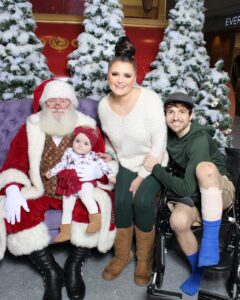
“But the chemo knocks you out, too. Once you start it, you’re tired all of the time. I start my chemotherapy in December of 2024, and it’s basically like this: I sit in this cancer/chemo bed, I have a PICC line on my left bicep, I still have a scar from it, and they just pump me with chemo. And then for two weeks after every chemo dosage, you feel drained, and it’s in your stomach. I’m so sick, I can barely lift my phone. My cell phone is sitting right next to me. So I’d be on the couch, and I have a text message, and I tried to get to it and answer it. I was still doing as much work as I could. I never blanked for a single week in my entire career at USHA, and I didn’t blank when I had cancer either. But it was all such a struggle. As I said, my cell phone would be sitting right next to me, and I know I need to get to this text, and half the time it was just impossible for me to get my arm up to go over and grab my phone.”
“It was draining. It was pretty defeating during Christmas last year. My in-laws, they always take a vacation during that time, and we went to Rosemary Beach. Lindsey and Charlie had a lot of fun with her parents. But I just lay in bed in a hotel for five or six days, and the chemo treatments ran all the way through March of this year. I had different run-throughs, different types of chemo. It was a lot. But once it was done, it was good, and it was over. And then I was in kind of a waiting mode. I had to wait for six months before I could even do my final test for cancer, and really start living well for the most part. By April of this year, I was living pretty normally. As crazy as that sounds. I wasn’t in remission yet. I didn’t have a green light, but I was living fine.”

During this ordeal, Carson says his USHEALTH Advisors family was there every step of the way. The core mission of the company is HOPE: Helping Other People Everyday. It speaks to the heart of what the company does for clients and, in turn, for team members, agents, leaders, and home office staff, because everybody matters.

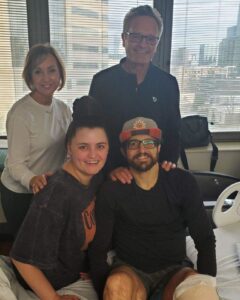
“I mean, the amount of support that I had with the home office was amazing,” says Carson, “with text messages and phone calls and various deliveries. But my personal, my core team here in Nashville and in Chattanooga, I mean, they had meal drives set up. They visited me often, both in the hospital and at home. I’ll tell you what they also did for me. I am not very good at delegating. I’m just so hands-on with everything. And obviously, I can’t be hands-on when I’m sitting in the hospital – but my team picked up the torch, and they held it and carried it just fine. Summer Cottrell and Josiah Harwell, my two Satellite Sales Leaders in Nashville, and Jordan Tant in Chattanooga, were amazing. It was nice to see all the support that I had, and it was really sweet. You get to learn who your true friends and family are when you go through something as trying as this.”
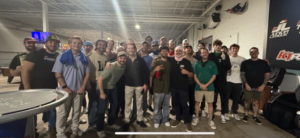
As Carson said, delegating was never part of his genetic makeup. Carson’s perfect day is having success at work. He loves it. And Carson had a hard time not being on top of everything going on with his team and his business. But the illness taught Carson patience and gave him clarity.
“Everyone taking care of the team was very reassuring,” says Carson. “I now delegate more than I ever did because so many showed me that they could take that on, and it’s allowed us to grow even more. And because we’ve grown more, I have to have some help with that. I can’t be as hands-on as I used to be with the number of agents we have on the team now. And so it was really nice, really nice to know that the business still goes on with me not being there looking over everything all the time.”
“I also heard from everyone you could imagine at our USHA home office, and not just ‘Hey, hope you’re feeling better’ messages, but constant check-ins, constant, constant check-ins, asking for updates and such. And we laugh about it now because some of the check-ins received pretty dark answers from me in the early days. I really enjoy working with this company because I was in such a dark space, not seeing a lot of light at the end of the tunnel. But everyone was so supportive. And now we laugh about it. It wasn’t funny then, but they all checked in on me. It was super sweet.”

Carson began his journey with USHEALTH Advisors 11 years ago, in December 2014, and now, even after all this time with his USHA opportunity, Carson says he has a new perspective to share with his clients. Everything has a deeper meaning now.
“It used to be more of a transaction when I’m speaking with somebody to get to my successful day,” says Carson. “And now I’m more grateful for every day that I have and every conversation that I have. Hopefully, I’m better with my family, too. So it is not just with work, but if you had told me that I would be this person a decade ago, or even a year before cancer, I would not have known that I had this in me, or how now I’m looking forward to every conversation with somebody, whether it’s a client or an agent or a friend or a family member. Whereas in the past, it’s sad to say, but it was like something that I needed to do, like I had to get through it to get to the next conversation, and then the next conversation, and so on. I didn’t take a moment to stop and smell the roses. And now I’m much more centered when I’m talking with people, I’m thinking about that and how much I’m enjoying that, and how you don’t know if you’re going to get to have those conversations tomorrow. I probably used to think, and maybe the word invincible is not the perfect word, but I thought that I was going to be in good standing with my health for years and years to come. That’s not the case. And now I’m more grateful for all life has to offer.”
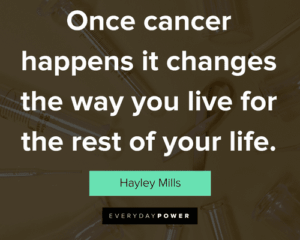
Carson has also learned how his scars make a difference. Carson’s health challenge and going through his experience with the agents on his team have taught everyone an important life lesson. It’s a lesson we all know, but often don’t pay attention to because we don’t slow down and reflect to appreciate it.
The fact is, it’s not the facts that touch people; it’s the stories that matter.
“My story is now an extension of me, too,” says Carson. “I’m going around the office, and there’s not an hour that goes by that I don’t walk around and hear one of my agents talking about their close co-worker who got diagnosed with cancer, and here’s how our insurance plan and our supplemental policies worked for him. And so it’s not just a story that I tell, but now it’s been extended to 150 other agents out there, if not more for that matter.”


It bears repeating: stories matter. They define our lives, and without them, we cease to exist, since it’s our shared experiences, good and bad, that make up the fabric of our lives. Carson watched his fabric get ripped at the seams, but now he’s back, and everyone is grateful and will be better for it in the long run, including Carson’s clients and the company he loves, USHEALTH Advisors.
“I’ll tell you what the experience has done for me,” says Carson. “You think about sales, and if you’re going to work in sales, you’d better find something that you can feel good about because you’ve got to lay your head down every night and feel like you’re doing something worthwhile. I have always felt that when you are working in health insurance, you do think about all kinds of problems out there with your health, because you hear all the stories from clients. But the one thing you’re not worried about is your policy, your plan. And that’s me. I have a policy through the company. Of course, I had Medguard (critical Illness policy) with my plan, and I had the AIBC Association with my plan. And I now understand why it’s all so important. And that I must have empathy for others and think ahead for others when it comes to their policies. I mean, when I’m talking to clients now, my sales experience is so much more enjoyable because I’m talking about my experience, not just another client out there that had this serious health issue, but I’m talking about myself.”
“I know how it feels now to not be fearful of going into major medical debt, not going into a situation where you’re going to have to pay hospital bills for the rest of your life. During my hospital stay, I had one claim alone, for $292,000. I probably had over $400,000 to $500,000 of claims. But I wasn’t worried about that part, because I was never worried about my policy and how it would take care of me. And so it’s made my experience with clients that much more enjoyable. And now when talking with a client or just a person, if they have a cancer story, I can really relate to them, and I can personally understand what they’re going through. Before, when somebody said, I have cancer, I’ve had cancer, my mom has cancer, you’re like, “I’m so sorry.” You feel bad for them. But when you’ve experienced it first-hand, you can empathize and sympathize so much more.”

And there’s one more lesson Carson wants to share.
“The one thing that I would say is the learning experience that I have had over this past year and even over my past decade with this company, and how the personality you have today is just going to evolve, no matter what, over time. And if you think you know it all today, or don’t know enough today, and you’re fearful of that, don’t be; it’s going to evolve. The person that I was and the agent that I was and the leader that I was back in 2017, 18, 19, 20, I’m just night and day different now. I was pathetic. I was not a good leader back then. I didn’t give anybody the time of day, and I didn’t know that there was more to me and more to life and more to relationships. And now, of course, hopefully I’ll be much more evolved when I’m 48 versus 38, but the person that I am today is so much more dynamic in terms of trying to enjoy relationships with people. It’s a new sense of purpose I didn’t know I had before.”
Thanks for sharing, Carson. Your story matters.


Until next time, thanks for taking the time.
Your Storyteller,
Mark Brodinsky