
Never sell yourself short. You’re on this spinning orb we call Earth for a reason, and who you are and what you do make a difference and impact the lives of people you can see, and even those you may never lay eyes on.
Now, imagine building a business focused on this mission, and bringing forth all the goodness you have to give in a way that changes the lives of others. Value matters, big time.
The journey of this process, the ups and downs, the good and the bad, make for an amazing story and one others will want to hear.
Everyone has a story.
Welcome to Mark Brodinsky Storytelling.
_______________________________________________________________
Mark Brodinsky Storytelling: One Day at a Time

Let’s get to the heart of the matter, quickly and with meaning. The title of this story says it all. The phrase “One Day at a Time” might sound cliché and overused, yet it’s not. Because the words provide perspective to anyone on this planet who is living their life – we all only get to experience life in increments. You don’t live a week, or a month, or a year all at once, but those 24 hours you have each day, one day at a time – wow – they can bring joy, pain, sweat, tears, exuberation, devastation, and sometimes, all at once.
Alison Stark has lived this mantra for several years now, not just since she joined the ranks of new agents with USHEALTH Advisors, but also a year later when, besides her choice to join USHA, she made the most important decision of her life.
She chose sobriety.
“I stopped drinking, April 1st, 2023,” says Ali. “And it wasn’t some April Fool’s joke; a year after contracting here, same date, I decided I was done. April 1st is a very important date for me.”
And let’s stop here before we go further, without any explanation yet from Ali. Let’s gain a little life perspective on this challenge so we’re all on the same page.
When we look at leaders who drive this organization forward, we often talk about their metrics: their strategic foresight, their resilience under pressure, and their ability to guide teams to life-changing success. But true leadership isn’t just forged in the office. It is forged in the deepest personal trials an individual can face. Everyone struggles with something. Everyone you will ever meet in your entire life is going through something. A life story isn’t defined by a lack of struggle, but by an extraordinary triumph over it.
Society sometimes views addiction as a moral failure – a simple lack of willpower, a series of bad choices, or a character flaw. But science and medicine have long since disproven that myth. Alcoholism is a chronic, progressive medical disease. It is an illness that fundamentally alters the brain’s chemistry, hijacking the neural pathways responsible for survival, logic, and impulse control. Just as we would never shame an executive for battling a chronic illness, or expect someone to simply ‘willpower’ their way out of a heart condition, we can’t view addiction through the lens of blame. Ali was never a weak person trying to be strong or good; she was a sick person fighting to get well.
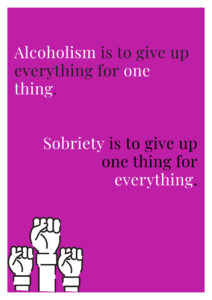
Now, let’s let Ali explain the rest, because the bottom line here is, and we all know this, she is not the only one to face this uphill battle. But Ali stared down the demon and won.
“I started drinking at a really young age,” says Ali. “I think I was 15 or 16. I always was the one that just drank too much, took it too far. Alcoholism runs on my mom’s side of the family. It’s pretty bad. I mean, looking at the family tree, there’s quite a few of us that have a problem with drinking. I think it got amplified when COVID hit because I had less of a schedule, less structure, and more time to drink. So that’s when it really took over. I mean, I was functional until then, I would say, and then it was pretty bad after that. I’m sure for a lot of people living through COVID, being stuck at home, they drank more, but for me, it was very apparent after that what a big problem this was in my life.”
So, April 1st, 2023, Ali made her decision, and at that moment, though she hadn’t experienced it fully yet, it would change her life.
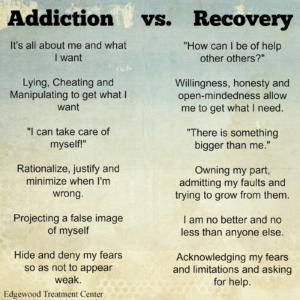
“My greatest accomplishment is sobriety,” says Ali. “I struggled with that my entire teenage to adult life. And so a year into the business that I started here, I stopped drinking. And that was my biggest challenge as well. I joke with the people I work with now, but I literally cried for about a year and a half. Just the emotional toll that it took and going through all of the ups and downs when it comes to not drinking anymore and coping with feelings in other ways. It was very difficult. But I mean, it made everything that I’ve done since that time much sweeter. Without sobriety, I couldn’t have accomplished anything that I have. There’s just no way.”
And because of her courage, her determination, her will to battle back from the brink, take a look at what Ali has accomplished in her insurance sales career: Since her start with USHEALTH Advisors, Ali’s issued more than $3.6 million in business, and her teams (Ali is now a Field Sales Leader) have produced more than $20.7 million in health insurance policies.

That’s more than something to be proud of. And Ali can tell you how she built success here at USHA, being self-employed and 100% commission-based.
“Trust the process, says Ali. “I mean, I know it’s been said before. I trusted the people around me telling me what to do, and knew they had my best interest at heart, and I just did what they told me, and I got the results they were getting. So really, trusting the process, learning how to handle rejection, and keep going. I feel like if someone like myself, if I can do this, then anyone can. I mean, work ethic over skill any day, in my opinion. It takes a certain someone to work 12 hours a day and put everything you have into 500 calls a day, but that’s how you start. That’s how I started, and that’s how I’m where I am today. But just doing the hard stuff now and having a why, having an endgame, keeps you going because it’s not easy.”
“My why is my future life. I do want to have a family. I do want to have a beautiful home and have it with no stress. I think in my mind, having financial stability, of course, but not having to think and worry is something I’ve never dealt with when it comes to money. So I’m almost there. I guess I don’t really have to worry, if you know what I mean, but be 100 percent in a position where I can be comfortable and not think about that type of stress. I mean, that was a big stressor as a kid.”
And what about being a kid? For the first part of her life, Ali grew up in Plainview, New York. Then, when she was in high school, her family moved to Arizona. “That was a little challenging age to move,” says Ali. “But my dad got a new job and moved us there – my mom, myself, and my older brother. My brother and I didn’t really get along as kids. I think that’s because I was annoying and he was older and didn’t really want me to hang around, but we’re definitely close now.”
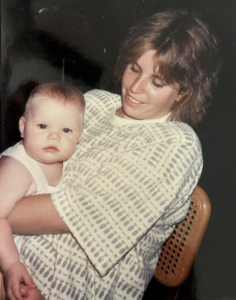
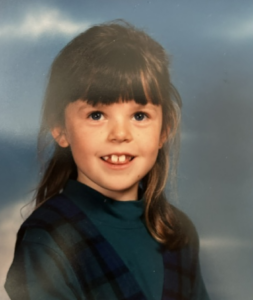
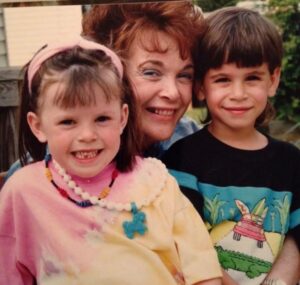
“My dad worked a lot. He was a landscape designer, and when we lived in New York, my dad and my grandpa owned a nursery together. They also did landscape maintenance, had a crew, and did that till the sun went down. Then, in the early morning hours, my dad drove a Snapple truck. So he worked most hours of the day. My mom was home with us, and we never really had very much. I grew up with a family that did okay, but money was always a struggle. And even moving to Arizona was a huge risk my parents took. I just remember feeling that as a kid. But I had a happy childhood. I mean, I had great parents; I was close to my neighbors. Though I had a hard time adjusting with a New York accent in Arizona for a while, I lost my accent quickly because I didn’t want to get made fun of anymore. Though sometimes it comes out when I’m around New Yorkers,” laughs Ali.
Ali tried college in Arizona, but it didn’t go so well. “I originally went to ASU, Arizona State University,” says Ali, “but I partied a little too hard, and I dropped out after my first year. And that’s when I started working before I went back to school. I ended up going to community college in San Diego, and I graduated from San Diego State University.”
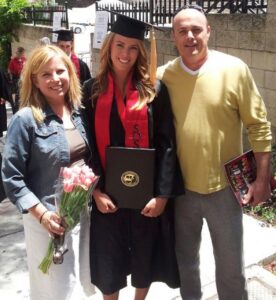
Eventually, Ali made the cross-country trip to move to the East Coast. “I got married, and it didn’t work out,” she says. “I moved out here for a man, my ex-husband now. That’s the reason I’m here in Florida.”
Having a degree in social work, Ali first went to work for a non-profit organization in Largo, Florida.
“I started working with Pinellas School with kids that were a threat to themselves or others,” says Ali. “But it was very low pay, and I did it for only six months. I was done. I couldn’t do it. Once again, because living in Florida, I think I was making $18 an hour or something, just embarrassing and really tough to make ends meet. So I started applying everywhere. What brought me to USHA is that I was literally applying for anything I was qualified for. I was in a bad place in my life. I was in an unhappy marriage. I was not fulfilled with work, not sure what the hell I wanted to do, and I was drinking a lot. So when I found USHA, it was just a feeling. When I went in and interviewed, I just felt good there and had no idea what I was getting myself into. But such a blessing. I mean, starting the business at USHA is what kept me here.”

And here, meaning USHEALTH Advisors, is where Ali says she felt like she had come home.
“My start went pretty well,” says Ali. “I started in 2022, got contracted that April 1st date, but I was up and down. Emotionally, I was a wreck, but I did pretty well as far as work. I think this business, being able to be self-employed, I think gave me the confidence to even get sober, if that makes sense. I don’t know. It made me want to like myself again. So I felt like it was a natural thing. I naturally did pretty well, but I wasn’t consistent because of drinking, and I’d have times where I was gone for a week. But I had a really supportive family. When I say family, I mean team. I mean everyone took me right in and supported me. It didn’t mean everyone stopped drinking; they still do or might, but I don’t.”
“I didn’t go into leadership maybe as early as I could have; I personally wasn’t ready because I could barely take care of myself. Once I was able to get some sobriety under my belt, I went into leadership, and I’m so happy I did. I mean, it gave me so much more purpose again. Obviously, we sell health insurance; we help families save money and get better coverage. Our plans work. But being in a leadership role, having a reason to show up to the office, and having that type of purpose gave me new motivation, which I needed at that time. And then a year after that, I was promoted to Field Sales Leader.”
“And now I want to be somebody who is supportive. I constantly think about, as an agent, what I would want from my leader. And that’s what guides me. And now having mentorship from Krystal Roberts and all the leaders around me is how I’m still in this position and why I’m still here.”
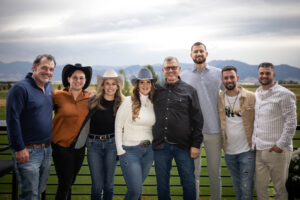
And Ali credits a few people she could truly lean on and learn from at the company. Her original Field Training Agent and then also her best bud and one of her biggest supporters, her Satellite Division Leader, Doug Alonzo.
“Doug Alonzo, he’s been my constant since day one,” says Ali. He and I are the only two from the OG; the only other person who’s been at this office as long as I have. He’s been a solid rock and foundation for so long. He’s definitely up there, and as I mentioned, Krystal – now that we’re with her and part of her division – I mean, I’ve never worked harder. She’s someone that I want to work hard for. She’s someone I aspire to be like. She has a lot of qualities that I want more of. She’s direct, tells you like it is, and has made a huge, huge impact on me.”
And with all she’s endured, fought back from and overcome, Ali says she has advice for anyone joining this company, or even in general, making their way through life: “Be yourself, that is the one thing that’s created success for me is being able, to not necessarily to sell myself, but to sell who I am as a person and fall in love with that process, and to be there for other people. Be yourself; that is really the biggest thing I think. Your genuine self is so endearing, so being yourself and who you are is going to take you a long way. Be true to yourself.”

And Ali’s been true to her process, though struggling mightily at times, to become sober and then to lock into sobriety. She has some words of encouragement for anyone battling the same addiction.
“One day at a time, you know, one day at a time. I can empathize with anyone going through it, cause even thinking about it makes me cry… it was just so hard. But take it one day at a time, keep going, it’s possible, it’s all possible.”
By sharing her journey, Ali reminds us that our vulnerabilities do not disqualify us from leadership – they humanize us, they connect us, and they prove just how unbreakable we can be.
We must all take life, one day at a time.
Until next time, thanks for taking the time.
Your Storyteller,
Mark Brodinsky